Insurance and Safety for Professional Oven Cleaning
Keeping customers and operatives safe is the cornerstone of any reputable oven cleaning or oven maintenance service. In the realm of domestic oven cleaning and commercial oven cleaning alike, clear policies on insurance, staff training, proper equipment and documented risk assessments are essential. This page outlines our approach to public liability, operative training, personal protective equipment and how we identify and control hazards during a deep oven cleaning or light maintenance visit. Safety is not optional — it’s integral.Public liability insurance is the first line of protection for both the customer and the oven cleaner. Our public liability policy provides coverage for accidental damage, bodily injury and third-party claims that might arise during a job. Whether providing professional oven cleaning for a single-family kitchen or scheduled commercial oven cleaning at a restaurant, the insurer and policy limits are chosen to reflect the scale of work and potential exposure. We recommend that any oven cleaning business operating on-site carries an up-to-date liability certificate and can produce evidence of cover on request.
 Why public liability matters: it gives peace of mind in case of unforeseen incidents, such as accidental damage to surrounding cabinetry, a slip or trip while transporting a heavy oven part, or burns caused by hot surfaces during a service. For customers, selecting a covered oven cleaner reduces the risk of bearing repair or medical costs themselves. For providers, clear insurance arrangements allow teams to focus on safe performance of oven cleaning tasks rather than worrying about the financial consequences of rare incidents.
Staff Training and Competency for Oven Technicians
All operatives involved in oven cleaning must be fully trained and competent. Training covers safe chemical handling, proper use of steam and hot water equipment, manual handling, and electrical and gas awareness. Our training program combines classroom instruction with supervised practical sessions so that each oven technician demonstrates competency in both domestic oven cleaning techniques and the more demanding environment of commercial catering equipment. Refresher courses are scheduled regularly to ensure knowledge stays current. Continuing professional development is encouraged; it includes updates on new cleaning chemicals, safer degreasing methods, and revised safety guidance. Workers are instructed in how to spot hidden risks, such as weakened oven seals that could release heat unexpectedly, or fragile ceramic hob surfaces that require different handling. Documented competency records, certificates and the dates of the last training session are kept for every operative.
On-site induction forms part of our safety routine: before starting a cleaning visit, the lead operative conducts a quick briefing covering the specific hazards of that appliance and the site. This ensures that each team member understands client-specific concerns, access limitations and emergency procedures for that location. A robust handover process is used when multiple teams work on larger commercial oven cleaning projects.
PPE and Safe Work Practices for Oven Cleaning
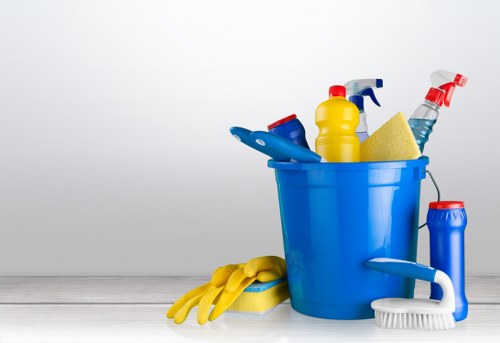
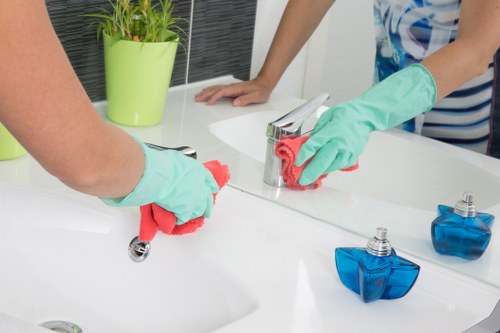
Appropriate personal protective equipment (PPE) is mandatory for all cleaning operations. PPE reduces exposure to chemical splashes, heat and sharp edges, and helps prevent trips, slips and contaminant spread. The following list highlights common items used by trained oven cleaners during both light and deep oven cleaning tasks:- Chemical-resistant gloves — to protect hands from caustic degreasers and solvents.
- Safety goggles or face shield — to stop splashes reaching the eyes.
- Heat-resistant aprons or protective clothing — where work involves steam or hot parts.
- Non-slip footwear — reducing trip hazards on wet surfaces.
- Respiratory protection — where aerosolised chemicals or dust are risk factors.
All PPE is regularly inspected and replaced as necessary. Equipment maintenance is part of the safety management system: hoses, tanks and steam generators used for oven cleaning are checked before each job to prevent leaks and failures. Operatives are trained in correct donning and doffing procedures to avoid contamination and maintain hygiene standards.
 Risk Assessment Process for Oven Cleaning Works Effective oven cleaning safety begins with a structured risk assessment process. Before any work is carried out, a formal assessment is completed to identify hazards, evaluate the level of risk and determine control measures. This process is tailored to the service type — whether a routine domestic oven clean, a deep clean of a busy commercial oven, or specialised restoration work of heritage ranges.
Key stages of our risk assessment: initial site survey, identification of specific hazards (chemical, thermal, electrical, mechanical), assessment of who might be harmed and how, implementation of control measures (PPE, isolation of power/gas, ventilation), and recording the conclusions and required actions. The assessment also defines emergency procedures and first aid arrangements specific to the job. Control measures are practical and proportionate — for instance, isolating gas supplies during internal cleaning of a gas oven, or using containment mats to protect flooring in sensitive commercial kitchens.
Monitoring and review: risk assessments are living documents. After each oven cleaning appointment we review outcomes, note any incidents or near misses, and adapt procedures where necessary. This continuous improvement cycle ensures that domestic oven cleaning and commercial oven cleaning services evolve with new risks and technologies. Safety, training, insurance and a documented risk process together create a reliable, professional service. By prioritising these elements, a responsible oven cleaning provider safeguards clients, staff and premises while delivering high-quality cleaning and maintenance outcomes.